Digital Storytelling involves a few things. It can involve oral history and interviews, archiving and preserving etc. Libraries can define digital storytelling how it best fits their mission and their population of users. kinds the tools and skills necessary to tell their stories and in some instances empowers people. For example in the article, Digital Storytelling in Different Library Settings, a public library defines digital storytelling as this “…story construction within a multimedia framework, involving some combination of digital text, images, video, recorded audio narration, and music or other sound elements” (Czarnecki 23).
Therefore, digital storytelling can look different and serve multiple purposes depending on the institution. Digital storytelling can focus on individual stories or be on multiple stories. It teaches the participants how to use different programs to enhance their stories and gives them skills they can have forever.
Works Cited:
Czarnecki, Kelly. “Digital Storytelling in Different Library Settings.” Library Technology Reports,
Libraries have had to grow and change as time has progressed. Libraries have incorporated new programs and resources, technology, multiple formats for books as well. One example of increased programming is through partnering with other local institutions and organizations to help continue to reach their library community. For example, the New York Public Library partnered with local institutions such as museums to grant access to library users, “while providing such access might not be seen as a traditional role for libraries, it is all part of a piece, said Brooklyn Public Library President and CEO Linda E. Johnson…we have been focusing on how to expand the definition of literacy," (Passy). The discussion of what literacy means and the expansion of this concept and the forms it can be developed from needs to continue. There’s value in reaching out to our communities. Furthermore, given the circumstances due to the pandemic there’s been an increase in virtual programming as well which allows people to have community from wherever they might be. Because of the advancement of the technological capabilities of the devices available to us, there’s been a shift to move resources and materials online. This shift has been going for awhile now affecting many libraries no matter the size including the Library of Congress, “…that means consolidating multiple reading rooms and making the experience of in-person researching more like the kind of one-stop shop we've come to expect online” (LaFrance B.2). Although libraries may take the transition to online resources and materials being available at their own pace, it’s changed the definition of what libraries can be. The definition of libraries and the kinds of information, resources, and materials they can provide continues to grow and it’s a great thing.
Work Cited:
LaFrance, Adrienne. “Tensions Arise as the World Grows More Digital.” The Washington Post,
Libraries give users access to so many different things outside of just books. For a lot of users the library may be their primary access to the internet and computers. Some users may use the library computers to be able to complete their homework, create work presentations, or create assignments of their own. Therefore it is important to discuss the different types of presentation tools a user can typically find and utilize while using a library computer. Presentation tools can come in many different forms of various platforms. It can be tricky to know which ones could be of use to you when you’re using library resources or a library computer. We will discuss one very common presentation tool that can be found in libraries, Microsoft PowerPoint. Libraries are hubs of information and institutions of knowledge, the use of presentation tools works with the missions many libraries already have in place. The ability for users to continue to get their knowledge needs met and being able to demonstrate that learning through the presentation tools is a phenomenal concept, “many of the information resources that students might use to prepare the presentation are in the library” (Mitchell 34).
Microsoft Powerpoint is the presentation tool that typically requires a subscription as it’s part of the Microsoft Office programs. However, when library users utilize Microsoft Powerpoint through the library computers at their local library, it is provided to them at no cost. Microsoft Office provides an easy to use interface with the ability to jump straight in and jazz up your presentation to keep your audience engaged. There’s so many features including animations, transitions, and audio and video capabilities. Furthermore, you can also add notes as the presenter to guide you along while you’re presenting which can be very helpful. If you’re starting and finishing a presentation at the library then it would be a great choice for you. Because if you wanted to work on the presentation outside of the library you would need to make sure you have access to it on a different computer.
Microsoft Powerpoint is one of the many types of presentation tools that are present in libraries. It’s an example of the access libraries give to their users and continue to meet their needs. It can provide users an outlet to create their presentations and help them become proficient when using these programs.
Works Cited:
Mitchell, Gregory A. “Distinctive Expertise: Multimedia, the Library, and the Term Paper of the
As we enter the new “digital age” libraries are evolving along with it. One aspect of library services that is transitioning more and more into the digital age is reference services and collections. In the past, print reference collections were a staple in libraries, such as encyclopedias, dictionaries, atlases, and more. However, with the rise of online resources, now with a click of a button we can access so much reference material digitally.
There has been debate over where the state of reference material stands between print and digital, with some librarians stating that print reference is dead, while others prefer to hold on to print reference materials to the end of time. Print reference materials are still important for various reasons, such as patrons who prefer to read through physical copies as opposed to digital versions, the reliability of print sources, and its accessibility (Terrell).
However, people do not come to the library anymore just to look at print materials anymore. Now the library is an important space where patrons come to study, research, work, relax, and even build community. Many who do use the library for research purposes use libraries’ databases and online catalogs from library computers or even remotely. As stated by Terrell, “Digital reference services are just another way of organizing information—there is no revolution here, unless it is in providing information with more efficiency—with breadth, depth, and access that surpasses what is possible via a print-only reference collection”(58).
Not only is reference collections becoming more and more digitized, but reference interviews as well. Now patrons can seek help from reference librarians digitally, through zoom calls, instant messaging, text messages, email, and more.
As libraries adapt to the digital age, this does not mean that libraries have to choose between either print or electronic. Libraries can and should develop a right balance between the two in order to best suit the needs of all patrons. This could be by weeding out unused print materials and building a strong, sustainable print collection, while also having an expansive digital system that provides access to online databases, catalogs, and ebooks. Both print and digital media will have its place in the digital age of libraries.
Works Cited
Terrell, Heather B. "Reference is Dead, Long Live Reference: Electronic Collections in the
Digital Age." Information Technology & Libraries, vol. 34, no. 4, 2015, pp. 55-62. EBSCOhost; Library, Information Science & Technology Abstracts, https://login.ezproxy.palomar.edu/login?url=https://search.ebscohost.com/login.aspx?direct=true&db=lxh&AN=112088360&site=ehost-live&scope=site 10.6017/ital.v34i4.9098.
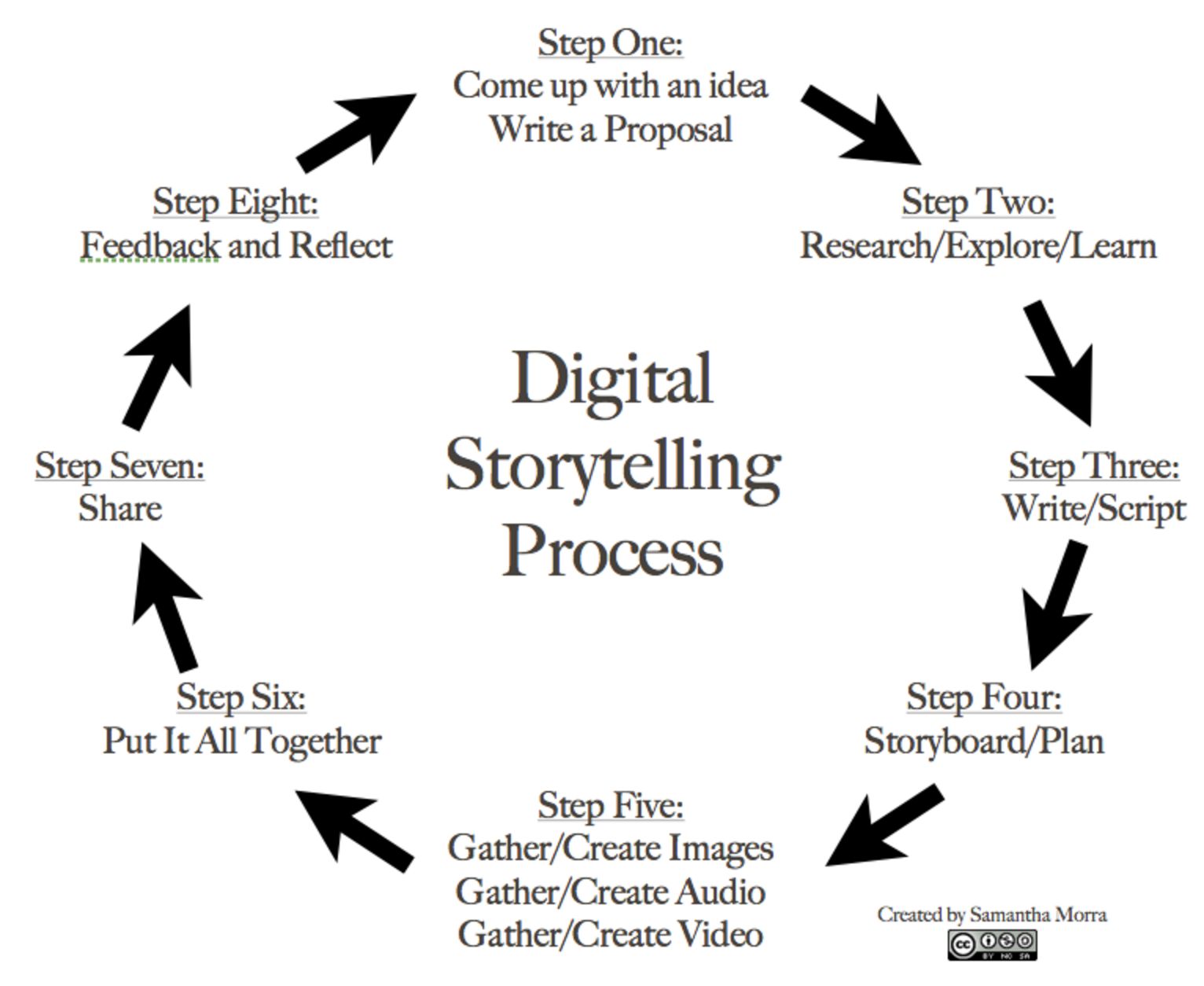
Digital storytelling is a form of storytelling that acts as a collaboration between the art of storytelling and digital media and can be used to present various types of stories, from personal recounts of memories, children’s stories, and more (Detlor et. al). Digital storytelling entails various characteristics, such as self-revelation, a voice over, stories about lived experiences, photographs, music, and is overall personal (Ceja et. al).
Digital storytelling is an important tool that can bring a library community together by joining the storyteller, participants, and audience (Ceja et. al. 73). “The founders of the Center for Digital Storytelling describe digital storytelling as having potential for catalyzing personal reflection and growth, education and awareness, movement building, policy advocacy, and research and evaluation” (Ceja et. al. 73).
Digital storytelling can take place in many forms and offers so much room for creativity. Libraries have used digital storytelling to document the history and experiences of their local communities known as historical digital storytelling (Deltor et. al). School libraries and classes also use digital storytelling as a way to engage students with different learning styles, who prefer visual and audio learning as opposed to traditional storytelling (Sukovic).
Digital storytelling is also a great tool for empowering individuals and the community by giving them the power to voice and present their own lived experiences through this format. It gives individuals the opportunity to share their personal stories and experiences through different formats outside of the traditional storytelling they may not feel comfortable sharing. The ability to dig deeply and reflect on personal experiences and share them with others through digital storytelling helps build a relationship between the storyteller and the audience.
Works Cited
Ceja Alcalá, Janet, et al. "Online inclusive pedagogy: A call-and-response dialogue on digital
storytelling." Education for Information, vol. 32, no. 1, 2016, pp. 71-85. EBSCOhost; Library, Information Science & Technology Abstracts, https://login.ezproxy.palomar.edu/login?url=https://search.ebscohost.com/login.aspx?direct=true&db=lxh&AN=112513196&site=ehost-live&scope=site 10.3233/EFI-150963.
Detlor, Brian, Maureen E. Hupfer, and David H. Smith. "Digital Storytelling: An Opportunity for
Libraries to Engage and Lead Their Communities." Canadian Journal of Information & Library Sciences, vol. 42, no. 1-2, 2018, pp. 43-68. EBSCOhost; Academic Search Complete, https://login.ezproxy.palomar.edu/login?url=https://search.ebscohost.com/login.aspx?direct=true&db=a9h&AN=146114292&site=ehost-live&scope=site.
Sukovic, Suzana. "iTell: Transliteracy and Digital Storytelling." Australian Academic &
Research Libraries, vol. 45, no. 3, 2014, pp. 205-229. EBSCOhost; Library, Information Science & Technology Abstracts, https://login.ezproxy.palomar.edu/login?url=https://search.ebscohost.com/login.aspx?direct=true&db=lxh&AN=98376518&site=ehost-live&scope=site 10.1080/00048623.2014.951114.
It is all about the presentation. Libraries and schools utilize various presentation tools such as Powerpoint and Google Slides to inform, instruct, intrigue, and persuade audiences. This post focuses on how to create an interesting and engaging Powerpoint or Google presentation that grasps the audiences’ attention.
It is important to ensure that your presentation is both “educational and entertaining.” (Belben, 2003). To do this, you must ensure that your presentation is pleasing, tailors to the audience’s needs, and is unique. Your presentation should stand out of the crowd compared to the countless, plain as day presentations the audience have seen before.
Now here are some strategies to make your presentation successful. Having a welcoming attitude is one way to make your audience feel comfortable and more engaged with what you are presenting. This can range from greeting individuals, giving them a small activity to work on as they wait, to handing out little treats (Belben). Another strategy is to always be organized. An audience can quickly tell when you have adequately prepared for your presentation.
Presentations should be meaningful. Question your audience by getting them to really think deeply. Encourage them to reflect on presentation materials. Using engaging examples, Lamb and Johnson’s article recommends when doing a history presentation to attach photos of everyday people, even of old photos of your own family members from the time period. Make the examples compelling by including stories, videos, and photographs that make the presentation more personal and alive.
Incorporate more technology. Although using Powerpoint and Google slides is already a technological presentation tool in itself, there are many more digital tools that can be used to make the presentation more engaging. Including polls, kahoots, forums, Google jamboards, online games, and more to get the audience engaged.
Presentations do not have to be the boring five to seven minute drawn out talk it once was. Presentations in the digital age with fun tools such as Powerpoint and Google slides can be meaningful and engaging as long as both the presenter and audience are ready to learn.
Works Cited
Belben, Cathy. "Making a Gift of Yourself: Preparing for SuccessfulConference Presentations." Teacher
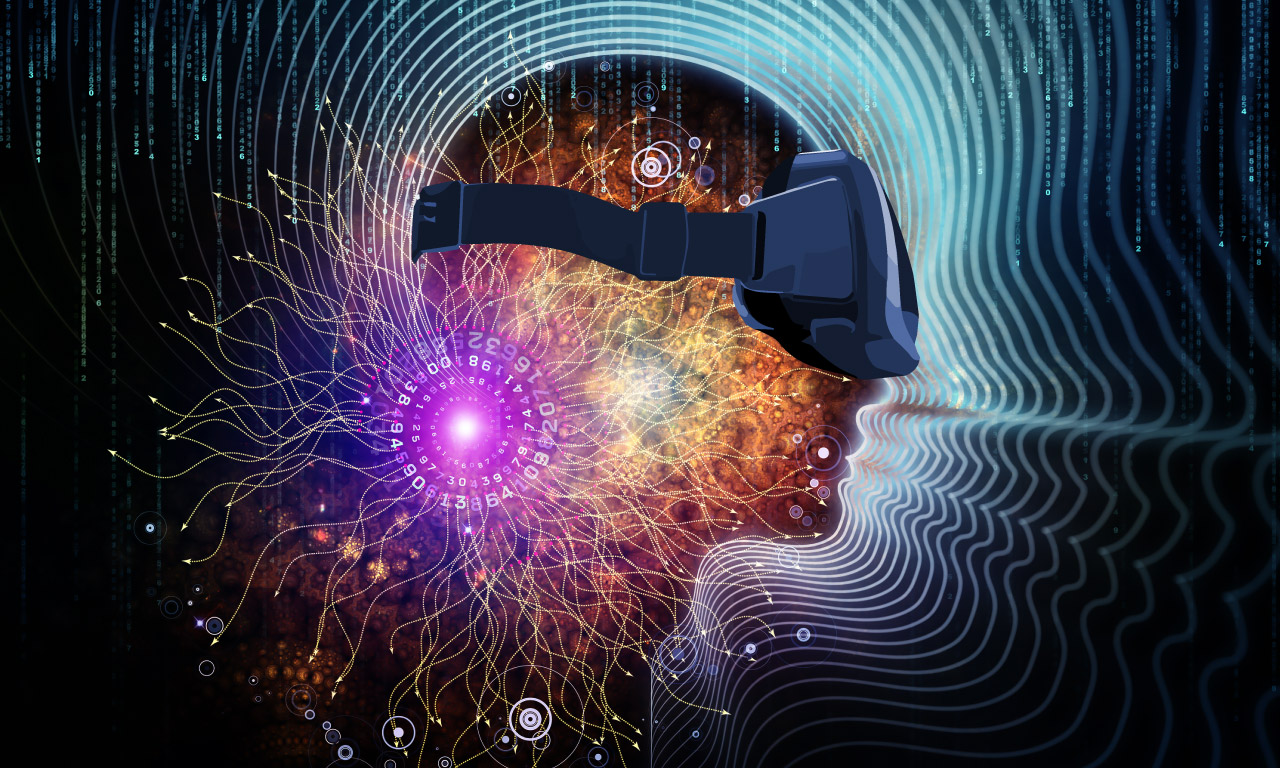
As libraries enter the digital age, many are adapting to include virtual reality in their systems. Virtual reality is a digital experience that simulates real life experiences through 3D technology, which allows users to navigate as if they were physically experiencing it. Virtual reality has been used by libraries to give simulated 360 degree tours, immersive storytelling, games, and educating. Virtual reality can also serve as a great tool in libraries by connecting nontraditional students to library services.
Angela Sample’s article focuses on how virtual reality can be used to diminish the anxiety non-traditional students face when it comes to accessing library services. Non-traditional students, which encompass many different groups, from students past the typical college age, parents, students with GEDs, independent learners, and more. These students are more likely to be unfamiliar with university libraries and the research process, and are more likely to be so overwhelmed they avoid the library altogether (Sample). But now with the rise of virtual reality, there is a possibility to challenge this library anxiety.
Based on a study by Oral Roberts University, the ORU library is working on the process of integrating virtual reality technologies to better serve non-traditional students. The project began with the development of a virtual library tour to help curb library anxiety among non-traditional students (Sample). The virtual tour allowed students to navigate through the college library and become familiar with all sections without having to physically enter the library. Results showed that using virtual reality can help make new students more familiar with the library and more likely to access library resources in the future.
Works Cited
Sample, Angela. "Using Augmented and Virtual Reality in Information Literacy Instruction to Reduce Library Anxiety in
image title translation: Boy using virtual reality glasses
The development of virtual reality (VR) technology has grown and developed over the years. It’s led many people, institutions, corporations and businesses to utilize it. For those who may be unfamiliar with VR technology, it allows users to interact with a virtual 3D environment. Virtual reality can particularly immerse those who use it into the environment they see using the program. I think virtual reality could be a great tool for libraries and another creative way libraries can expand themselves. Furthermore, depending on the demographic of users of libraries, this may be library users’ first interaction with VR expanding their knowledge and giving them new experiences as well.
Now that we have a bit more understanding as to what virtual reality entails, let’s discuss libraries’ potential role with it. Libraries strive to serve those in their communities and support their search for knowledge and resources. As technology has advanced libraries have had to as well, finding ways to incorporate new technology to continue meeting the evolving needs of the community. Virtual Reality is a part of this newer technology librarians and library staff should become comfortable with and think about implementing on the library; as the need for it may continue to increase over time, “it is important for libraries to be ready to offer support with virtual reality, just as we’ve offered support with prior technologies including tablets, laptops, computers, 3-D printers, etc” (Kirsch 5). The use of virtual reality can span both educational to recreational, as well as age groups too. Virtual reality could be an added bonus to your library, but it should be noted that most people will have a learning curve when using it. So like any inquiries in the library, staff should be properly trained to handle these inquiries or guide the library user to a staff member who may be more knowledgeable in this area.
Some libraries are finding ways to make virtual reality a more permanent part of their programming and education both in the US and internationally. For example, Oral University utilized virtual reality technology to create a tour with the goal of minimizing library anxiety experienced by students. They were able to conduct a small study with the participation of Oral University students to help navigate their thoughts about the usefulness virtual tour, “…we are encouraged that this tool that will assist our students in reducing library anxiety, with the result that they will visit and use the library more often to their benefit” (Sample, p 23-24). The ability to find a way to mitigate some of the common library anxiety, students or library users will feel can be a great asset to libraries. It helps bridge the gap for people and takes some of the pressure off of using the library. Whether a library chooses to use VR technology for more recreational or educational purposes, I think they should consider implementing VR into their libraries in ways they see fit best for their users and their staff.
Sample, Angela. “Using Augmented and Virtual Reality in Information Literacy Instruction to Reduce Library Anxiety in Nontraditional and International Students.” Information Technology & Libraries, vol. 39, no. 1, Jan. 2020, pp. 1–29. EBSCOhost, https://doi-org.ezproxy.palomar.edu/10.6017/ital.v39i1.1172
Over the years, libraries have been an essential part of the academic and literary community. While times are changing; libraries have become digital yet are still offered to the public. Digital libraries are constructed through digitization, thereby further enhancing access to information. Because of the new formats and standards, Barbuti (2021) states the “Re-usable of FAIR Principles into R4”:
Re-usable reusability guarantees the sustainability of digital entities as different reuses of descriptive metadata over time foster their transformation in cultural sources and memory (an example above all: the Flavian Amphitheater, that is the Colosseum);
Relevant relevance of digital entities connects to the transformations of
descriptive metadata functions linked to their reuse over time, and it is an indispensable
requirement so these entities evolve in memory and transform into cultural resource
Reliable reliability of digital entities strictly links to descriptive metadata capability of
testifying their evolution by representing the validated and certified processes that
characterized their life cycle;
Resilient resilience, that is: "the capacity of a system to adapt itself to the conditions of use and to resist usury in order to guarantee the availability of the services provided" (https://it.wikipedia.org/wiki/Resilienza), is the requirement to recover and reuse over time descriptive metadata preserving the memory of their original function even in transformation of their functions from practical to cultural.
The incorporation of “metadata” provides more content to informational resources and supports the “Re-usable of FAIR Principles” or “R4”. The conclusion of Barbuti (2021) asserts: “Our reflection starts by expanding the R of the FAIR Principles in R4, with the goal to create digital entities whose descriptive metadata shall be also Re-usable, Relevant, Reliable and Resilient. We think that these four requirements could boht guarantee the sustainability and foster the reuse and preservation of digital resources over time, by addressing correct proportion between quantity and quality of contents of descriptive metadata.” These four notions influence the enhancement of digitization in libraries.
Works Cited
Barbuti, Nicola. “Thinking Digital Libraries for Preservation as Digital Cultural Heritage:
By R to R4 Facet of FAIR Principles.”
International Journal on Digital Libraries, vol. 22, no. 3, Sept. 2021, pp. 309–18. EBSCOhost,
There are a multitude of online educational resources offered to the public, including PowerPoint. Presentation tools are offered to assist with learning via online or in the classroom. Libraries rely on these tools to educate students and patrons on the utilization of digital resources. According to Badge et al., “The phrase 'reasonable adjustment' in the SENDA legislation requires staff to ensure that all existing students can access their teaching materials in a format suitable for them. This includes the provision of resources that a student can customise, such as providing a lecture handout in the original word document, so that a student with a learning disability could change the font style and colour to make it easier for them to read and understand and the provision of software to enable text to be converted to speech.” Some educational tools and resources are still not as reliable as they should be. A few are expensive and not completely free for access. However; these tools are widely used by schools and libraries.
Libraries are known for their storytelling programs. These days; everything has become digital and now libraries are encouraging digital storytelling. Digital storytelling is a short form of digital media production that allows everyday people to share aspects of their story. Digital storytelling provides: creativity expression, collaboration, research, and resource selection. There are a few contradictions to storytelling; “Another important contradiction that emerged concerned differing viewpoints regarding adherence to archival standards” (Detlor, et al. 55). According to the abstract of “Digital Storytelling: An Opportunity for Libraries to Engage and Lead Their Communities”: Results suggest that digital storytelling is a viable mechanism by which memory institutions, such as libraries, can engage and lead their communities. These initiatives also offer opportunities for collaboration among institutions. However, libraries must heed a variety of challenges and concerns that can potentially limit or constrain these benefits”. This statement implies that there are limits to the benefits of digital storytelling.
As aforementioned in the previous post, “These days; everything has become digital”. This statement denotes that so many resources have become digital. Now there is the virtual notion to consider. Virtual reality has become accepted into the library. According to Hannah Pope: “Virtual and augmented reality (VAR) is not a new concept, but over the past couple of years, these technologies have become more accessible to the public, and libraries are at the forefront of this access” (5). Virtual and augmented reality has been exercised in the library. After conducting some research on the subject of virtual and augmented reality, Pope noted the following: “Libraries reported that they used virtual and augmented reality as a way to train workers, although responses to the survey did not detail how this was done” (9). It can be surmised that virtual and augmented reality contribute to effective learning in libraries for patrons, staff, and students.